Hollywood executives have always operated in a world where fame, money and public attention can attract unwanted attention. But as threats against high-profile business leaders become more visible, some entertainment executives are taking personal security more seriously than ever.
For some of the industry’s most powerful CEOs and studio leaders, security is no longer viewed as an occasional expense reserved for major events. Private protection, secure transportation, residential security systems and threat assessments are becoming increasingly important parts of executive life.
The change reflects a broader concern across corporate America, but Hollywood faces some unique challenges. Entertainment executives are highly visible, frequently travel for work and often make decisions that affect actors, employees, filmmakers and large creative businesses.
Why Hollywood Executives Are Increasing Security
Entertainment companies handle billions of dollars and employ thousands of people, while their leaders are often publicly associated with major business decisions.
A studio chief may approve a film cancellation, restructure a division, reduce a workforce or make difficult decisions about talent and programming. Those decisions can generate strong reactions from employees, investors, fans and members of the public.
Social media has made that relationship even more complicated.
Executives can now be discussed, criticized or targeted online almost instantly. In some cases, online criticism can develop into harassment, threats or attempts to discover someone’s private information.
Security professionals therefore increasingly monitor online activity as part of executive protection.
The Rise of Executive Protection
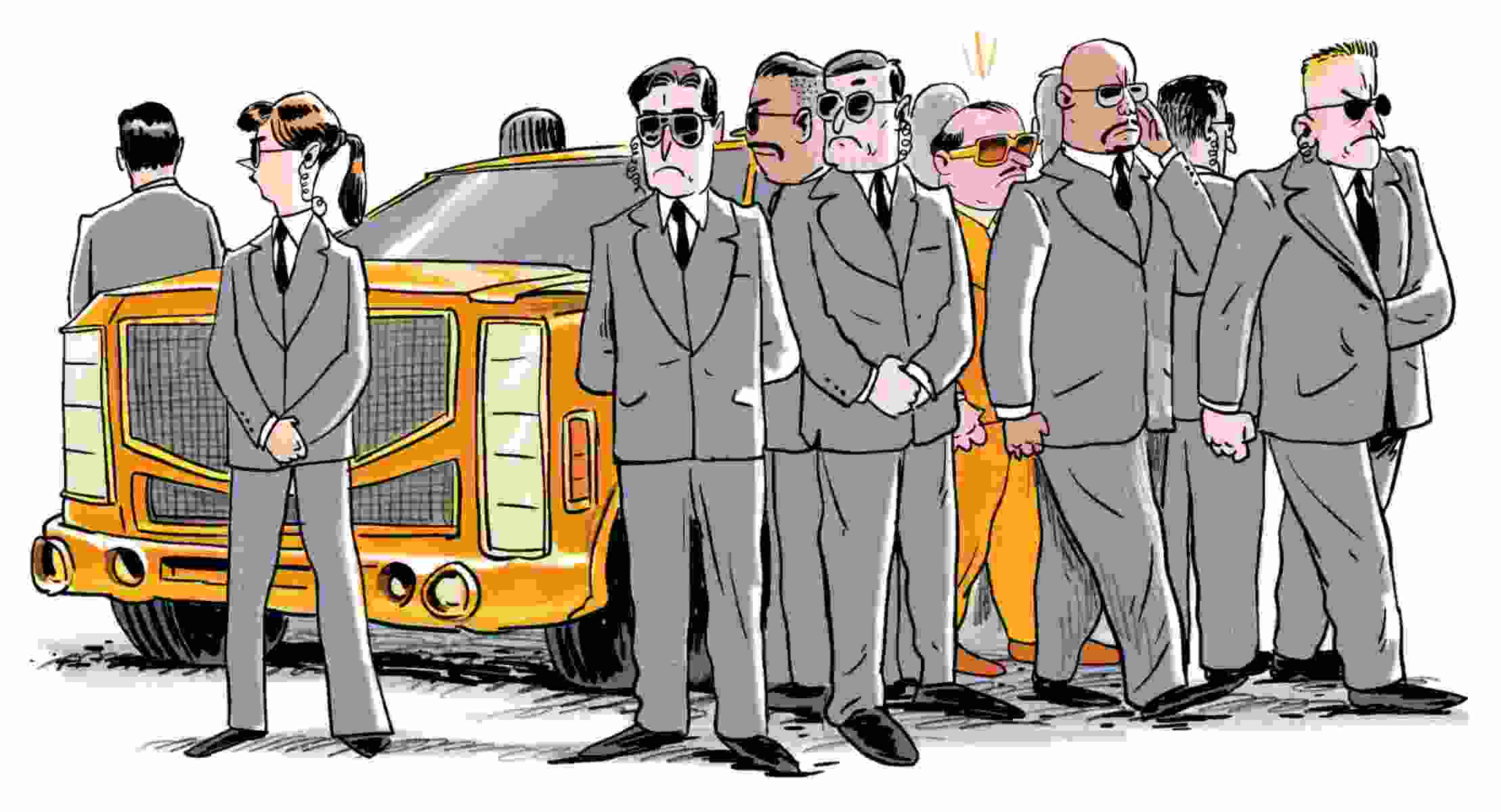
Executive protection has evolved far beyond simply assigning a bodyguard to walk beside a celebrity.
Modern security teams can include former law-enforcement officers, security consultants, digital-security specialists, residential-security experts and threat-assessment professionals.
Their responsibilities may include planning travel routes, checking venues before an executive arrives, monitoring potential threats and coordinating with local authorities when necessary.
For Hollywood executives, protection may also involve security during premieres, festivals, industry conferences and other high-profile events.
The goal is often prevention rather than confrontation.
Security professionals attempt to identify potential problems before they become physical incidents.
Security at Home Has Become a Bigger Concern
One of the most important areas of executive protection is the home.
High-profile executives can become vulnerable when personal information about their residences becomes available online.
Modern security programs can include controlled access, surveillance cameras, alarms, reinforced entrances and professional monitoring.
Some wealthy executives also employ security personnel around their properties, particularly when there is a specific or credible threat.
The emphasis is increasingly on protecting not only the executive but also family members.
Children, spouses and other relatives can become targets of unwanted attention simply because they are connected to a famous business leader.
Social Media Has Changed the Threat Landscape
The internet has made it easier than ever for people to communicate with public figures.
That can be positive for celebrities and executives who want to connect with audiences, but it also creates security challenges.
Personal information can sometimes be pieced together from social-media posts, public records, photographs and location information.
Even an innocent photograph can potentially reveal where someone lives, where they work or where they regularly spend time.
Security teams therefore often advise high-profile individuals to limit the amount of personal information they publicly share.
Digital security has become an important part of physical security.
Hollywood’s High-Pressure Environment
The entertainment business is particularly vulnerable to emotional reactions because movies, television programs and music are deeply connected to people’s identities.
A creative decision that seems like an ordinary business move to an executive can feel deeply personal to an actor, filmmaker or fan.
Studio leaders regularly make decisions involving budgets, cancellations, casting, distribution and employment.
Those decisions can produce intense reactions.
Most criticism never becomes a security issue, of course. But executives and their security teams have to distinguish ordinary criticism from behavior that could potentially represent a real threat.
That is why professional threat assessment has become increasingly important.
Security Is Becoming a Corporate Expense
For major entertainment companies, executive protection is increasingly treated as part of corporate risk management.
Companies may spend significant amounts on security personnel, transportation, residential protection and specialized consulting.
The actual cost can vary dramatically depending on the executive’s profile and the level of risk involved.
A short-term security detail for a major event is very different from a permanent protection program that includes security at home, during travel and at work.
For executives facing credible threats, however, companies may consider the expense necessary to protect both the individual and the business.
The Cost of Being Highly Visible
Hollywood CEOs often occupy a strange position.
They are powerful enough to make major decisions but are not necessarily celebrities in the traditional sense.
Nevertheless, their names can become widely known when they lead major studios, streaming companies or entertainment conglomerates.
That visibility can increase when a company is involved in layoffs, mergers, acquisitions or controversial projects.
The more public an executive becomes, the more difficult it can be to separate professional life from personal life.
For some leaders, additional security is therefore becoming a normal part of holding a high-profile position.
Technology Is Playing a Bigger Role
Security companies are also using technology to protect executives.
Advanced surveillance systems, secure communications, location monitoring and cybersecurity tools can help identify potential problems.
Artificial intelligence and automated monitoring systems are also being explored for threat detection and digital risk analysis.
The objective is not simply to react when something happens.
Instead, security teams increasingly try to identify unusual patterns, suspicious communications or emerging risks before they become serious incidents.
This combination of human expertise and technology is changing the way wealthy individuals approach personal protection.
Protecting Families and Employees
Executive security can extend beyond the CEO.
Companies may also consider the safety of senior executives, board members and other employees who become publicly associated with controversial decisions.
Family protection can be another major component.
When a person becomes the subject of threats, relatives may also require additional precautions.
That can involve changes to travel arrangements, privacy practices and home-security procedures.
The aim is to reduce the number of opportunities through which a threat could reach the individual or their family.
A Changing Hollywood Culture
The increased focus on security reflects a larger transformation in Hollywood.
The entertainment industry has become more corporate, more digital and more publicly scrutinized.
Executives are expected to communicate with investors, employees, audiences and the media while making decisions in an increasingly competitive market.
At the same time, social platforms have reduced the distance between ordinary consumers and powerful executives.
That combination can create enormous pressure.
For companies, protecting leadership is therefore becoming part of a broader strategy for maintaining business continuity.
Security Versus Accessibility
There is also a difficult balance between security and accessibility.
Hollywood has historically depended on relationships. Executives need to meet filmmakers, actors, writers, journalists and business partners.
Too much security can make those interactions feel distant.
But too little protection can create unnecessary risks.
The modern executive-security model attempts to find a middle ground, allowing leaders to remain accessible while ensuring that reasonable precautions are in place.
What the Trend Says About Hollywood
The growing investment in executive protection is ultimately a reflection of how much the entertainment business has changed.
Hollywood executives now operate in an environment where professional decisions can quickly become personal controversies.
The internet can amplify criticism, personal information can spread rapidly and public figures can face attention from millions of people.
For the industry’s most powerful leaders, security has consequently become more than a luxury.
It is increasingly viewed as part of doing business.
Whether that means professional bodyguards, secure transportation, advanced home-security systems or digital threat monitoring, Hollywood’s top executives are taking steps to protect themselves and their families.
The entertainment industry has always been about managing risk.
Now, for some of its most powerful decision-makers, that risk management increasingly begins with personal security.